
How to measure for the EasyWall flush-to-wall door
The EasyWall comes with its own aluminium frame, which is fixed into the wall and disappears under the plaster or plasterboard. That's why you start from the opening in the wall: it must be 1 cm larger than the frame.
- L Opening width
- H Opening height
- ↔ Wall type
Door, frame and opening in the wall
They are always linked: if you know one size, the table gives you the other two.
Choose the door, we'll tell you the opening
Tap the width and height of the door.
Is your opening a different size? Send us the measurements on WhatsApp and we'll tell you what to do.
| Door | Frame | Opening in the wall |
|---|---|---|
| 60 × 210 | 70 × 215 | 71 × 216 |
| 70 × 210 | 80 × 215 | 81 × 216 |
| 80 × 210 | 90 × 215 | 91 × 216 |
| 90 × 210 | 100 × 215 | 101 × 216 |
| 60 × 240 | 70 × 245 | 71 × 246 |
| 70 × 240 | 80 × 245 | 81 × 246 |
| 80 × 240 | 90 × 245 | 91 × 246 |
| 90 × 240 | 100 × 245 | 101 × 246 |
Want an 80 × 210 door? Prepare a 91 × 216 opening.
The frame is 90 × 215, the opening 1 cm more. For the 240 cm tall door, the frame is 90 × 245 and the opening 91 × 246.
Masonry or plasterboard
The EasyWall frame can be fixed in both masonry and plasterboard. It is in white aluminium and comes with a Kevlar plaster mesh already included, which prevents cracks between wall and frame.
Opening direction: the same door can be fitted to push or pull, left or right.
Three common mistakes
- Making the opening the size of the doorThe frame has to fit in the opening: always start from the table.
- Measuring the old doorWhat counts is the opening in the wall, not the door you remove.
- Measuring before the floor is laidHeight is taken from the finished floor.
The EasyWall doors
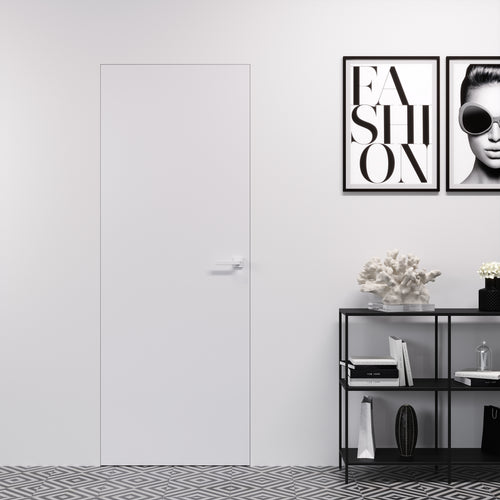
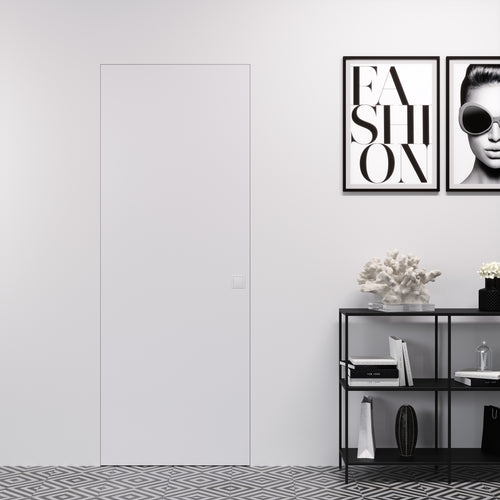
Send us a photo of the opening
Send us the opening measurements and the wall type on WhatsApp: we'll tell you which door to choose.


